Corporate Valuation, Oil & Gas

May 17, 2019

Royalty and Mineral Value Proposition Highlights Otherwise Underperforming Energy Sector

The burgeoning mineral market is leading the way for an energy sector that has lagged in returns for several years now.  This was one of the themes from the DUG Permian Basin Conference in Fort Worth last month.  Among the discussion, presenters including Scott Noble, CEO of Noble Royalties and Rusty Shepherd of RBC Capital Markets highlighted the ascension of the estimated $400 to $600 billion onshore mineral market in the U.S., depending on who’s doing the estimating.

The interest in the segment has been undergirded by the attractive cash returns coupled with fewer risks and burdens.

The interest in the segment has been undergirded by the attractive cash returns coupled with fewer liability risks, operating risks, and expense burdens.  In addition, royalty owners retain ownership rights to perpetuity.  These characteristics of royalty and mineral plays have drawn investors in as compared to the market’s negative response to upstream management teams merely seeking to beef up the size of their reserve reports.

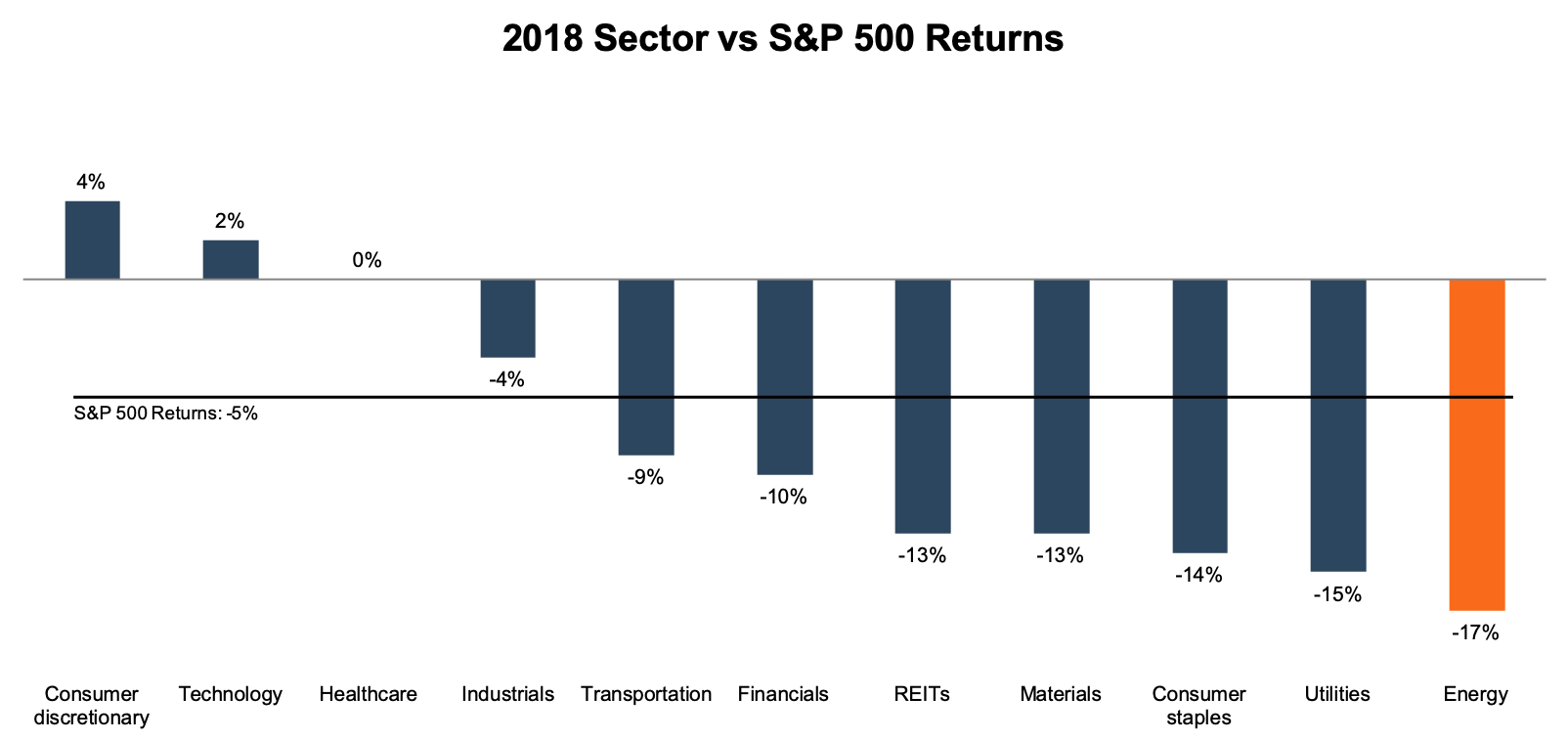
Overall, the energy market’s returns have been subpar.  As a sector, energy has lagged all other major sectors over the past several years. In 2018, the returns were again at the bottom of the heap.
[caption id="attachment_26449" align="aligncenter" width="940"]Source: Company filings and FactSet[/caption]

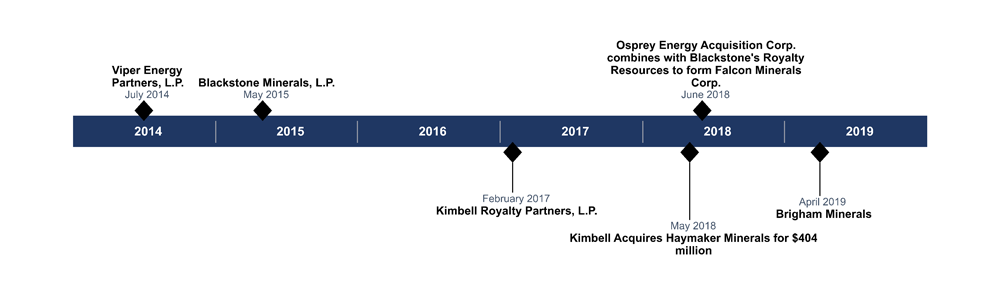
However, there is an energy sub-sector that has been an emerging bright spot: public mineral aggregators. Brigham Minerals (MNRL) is the latest mineral acquisition company to go public following a trend of other large mineral rights and royalty companies to IPO in recent years. Brigham began trading on April 18 at $18.00 per share on the New York Stock Exchange.  Brigham became the fifth mineral company to go public since 2014, far outpacing the energy sector in general.
[caption id="attachment_26456" align="aligncenter" width="885"]Source: Company filings and Brigham S-1[/caption]

The attraction and growing appetite for mineral aggregators lies in its asset level economics.  Several presenters at the conference touched on various factors that are driving returns and valuations.  While current producing wells bring in monthly cash flow, they also demand the lowest returns.  According to B.J. Brandenberger of Ten Oaks Energy Advisors, producing minerals are commonly purchased on expected returns of 8% to 10%, whereby DUC wells and permitted wells currently have expected returns around 12% and 15%.  Undeveloped properties are often valued at over 20% expected return profiles depending on various factors such as the hydrocarbon producing layers in the ground (or “benches” as the industry sometimes calls them).  Most of the uncertainty and intrigue has to do with undeveloped properties.  The reasons that expected returns are so much higher than producing properties lies in unknowns such as drilling timing, operator quality and expertise, production assumptions, and pricing differentials to name a few.

The mineral segment is representing an economic bright spot in a sector that, while improving, has resided in the dark from a stock return perspective.

This kind of uncertainty comes with the opportunity for outsized returns resulting in market attraction.  According to Oil and Gas Investors reckoning, there were 12 companies listed in their mineral company directory in 2015.  In 2019, this has ballooned to 140.

Public momentum has grown as demand for these investment vehicles is high. Given most new entrants in the market are private equity funded with exit expectations in upcoming years, the chances are high that we see an increase in the number of IPOs from mineral aggregators in the future compared to upstream and E&P companies.  Time will tell.  In the meantime, the mineral segment is representing an economic bright spot in a sector that, while improving, has resided in the dark from a stock return perspective.

Continue Reading

Q1 2026 Upstream Energy Earnings Calls
Themes from the Q1 2026 Upstream Earnings Calls
Q1 2026 upstream earnings calls reflected a notable shift toward energy security, selective production growth, and operational resilience amid geopolitical disruption and tightening global supply conditions. Companies emphasized disciplined capital allocation while increasingly viewing infrastructure and integrated capabilities as critical competitive advantages.
Mercer Capital Sponsors ASA Houston’s 2026 Energy Valuation Conference
Mercer Capital is pleased to serve as a Gold Sponsor of the 2026 Energy Valuation Conference, hosted by the Houston Chapter of the American Society of Appraisers. The conference will take place on Thursday, May 14, 2026, at The Briar Club in Houston, Texas, with both in-person attendance and live webcast options available. Bryce Erickson, ASA, MRICS; J. David Smith, CFA, ASA; and Andrew B. Frew, ASA, ABV, will attend on behalf of Mercer Capital.Now in its 16th year, the Energy Valuation Conference brings together appraisers, accountants, financial analysts, petroleum engineers, and many other professionals working across the energy sector. The conference is designed as a multi-disciplinary forum addressing valuation techniques and issues across the energy industry, including upstream, midstream, downstream, renewables, power generation, tax, governance, and emerging market considerations.This year’s program will address a range of current valuation topics affecting the energy industry, including energy transition, transaction activity, capital markets, and valuation considerations across upstream, midstream, and downstream sectors.Bryce Erickson is a Managing Director at Mercer Capital and leads the firm’s energy industry practice. Since 1998, he has led approximately one thousand engagements across diverse purposes, including gift and estate tax planning, litigation support, mergers and acquisitions, buyouts, buy-sell agreements, financial reporting, purchase price allocation, financing, and business planning. He regularly publishes on oil and gas industry topics in Mercer Capital’s Energy Valuation Insights blog. He is also a contributor to Forbes.com’s Energy sector.J. David Smith is a Senior Vice President at Mercer Capital and a senior member of the firm’s energy practice. He provides valuation services for tax planning, transactional purposes, and financial reporting. David is also a regular contributor to Mercer Capital’s Energy Valuation Insights blog.Andrew B. Frew is a Vice President at Mercer Capital and has nearly 25 years of business valuation experience. He has been involved with hundreds of valuation and related engagements across numerous industries and values businesses and business interests for gift and estate tax, charitable giving, buy/sell agreements, mergers and acquisitions, business succession and exit planning, and litigation support purposes. Andy also contributes regularly to Mercer Capital’s Energy Valuation Insights blog.Mercer Capital works with energy companies, mineral and royalty owners, oilfield services businesses, investors, attorneys, accountants, and other advisors on valuation and financial advisory matters. The firm provides business valuation, asset valuation, litigation support, transaction advisory, financial reporting valuation, and tax valuation services across the energy sector, helping clients address complex financial questions with clear, independent, and well-supported analysis.Mercer Capital looks forward to supporting the conference and connecting with energy valuation professionals and industry leaders in Houston. Additional information about the 2026 Energy Valuation Conference is available at https://energyvaluationconference.org/.For more information about Mercer Capital’s experience and expertise in the oil & gas sector, visit https://mercercapital.com/industries/energy-power/oil-gas/.
EP First Quarter 2026 Eagle Ford
E&P First Quarter 2026

Region Focus: Eagle Ford

Eagle Ford // The Eagle Ford exhibited modest production growth over the past year, broadly in line with other major basins, as output remained within a relatively narrow range. This stability reflects the basin’s maturity, with limited variability in production despite declining rig counts and continued capital discipline among operators.

Cart

Your cart is empty