Last year, many of our blog posts touched on the subject of inventory shortages due to plant closures from the pandemic. However, after stay-at-home orders were relaxed and plants got up and running again, there were high hopes among the major public dealers that inventory levels would return to pre-COVID levels in 2021 and dealerships could meet consumer pent up demand. However, manufacturers are facing a new obstacle on the production line that is a threat to reaching these inventory goals. All over the world, automakers (and other industries) are grappling with a shortage of computer chips.
In this blog post, we discuss the necessity of chips in the auto making process, how the chip shortage came to fruition, how it is affecting the industry, and what all this might mean for auto dealers going forward.
Small But Mighty
When considering all of the different digital products that you might use on a day to day basis, there is likely one specific thing that they all have in common: computer chips. While cars might not be the first thing to pop in your head when you’re thinking about digital technologies, they also rely on them for many different functions.
A mainstream car has more than 100 microprocessors.
As OEMs continue to innovate and more features become standard, consumers have benefitted from an enhanced experience while vehicle prices have increased. These advances have also increased the reliance on semiconductors, which have become a crucial part of the supply chain. Car companies can use them to power the modern-day technology in their vehicles, such as the engine, Bluetooth capabilities, seat systems, collision and blind-spot detection, transmissions, Wi-Fi, and video displays.
As Kristin Dziczek, a senior industry analyst with the Center for Automotive Research (CAR) notes, “Today’s automobiles use a huge number of computer chips, chips in the engine, chips in the seat, chips in everything, but they’re in tight supply right now.” A mainstream car has more than 100 microprocessors.
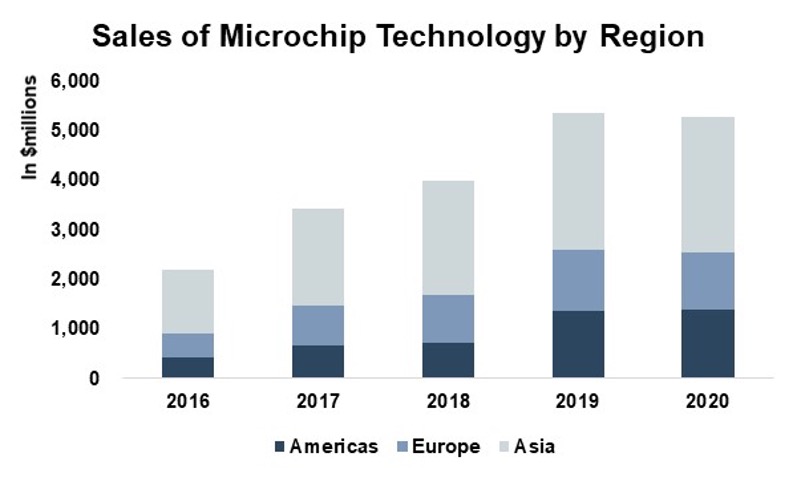
How It Started
Like many other production struggles that have occurred in the past year, the COVID-19 pandemic is at the root of the shortage of chips. With the new normal of being indoors, demand for electronics increased substantially, boosting demand for microchips. Xbox and Playstation also released their latest consoles in mid-November. The last consoles brought to market by these companies was in 2013, so the timing of this launch exacerbated these issues.
While demand for electronics was increasing at the beginning of the pandemic, demand for cars had waned, and thus, automakers like General Motors, Toyota, and Subaru, were forced to close factories at the onset of the pandemic. In accordance, this caused overly conservative demand estimates to be made. However, once the plants reopened, demand was much higher than anticipated, and the chips necessary to fulfill the demand just were not there.
Chipmakers tend to favor consumer electronics because their orders are larger than those of automakers. The annual smartphone market is more than a billion devices compared with fewer than 100 million cars. Automaking is also a lower-margin business, leaving manufacturers unwilling to bid up chip prices to avoid risking profitability. Automakers in China were the first to feel the impacts of the shortage, primarily due to it being the world’s biggest auto market recovering from the pandemic, but now the shortage has spread to auto manufacturers across the globe.
Current Impacts
Major auto manufacturers are already starting to react to the chip shortage. Ford is the latest, cutting production of its top money maker, the F-150 pickup truck, due to the chip shortages. The impact could be significant, as the Ford CFO John Lawler notes, “Right now, estimates from [chip] suppliers could suggest losing 10% to 20% of our planned first-quarter production.” This could mean a loss of profit of $1 to $2.5 billion in 2021. Ford is proactively trying to mitigate risk in other parts of their vehicles subject to supply chain disruption, and has hinted that they might be investing in battery production to avoid a similar issue on that front.
With not enough chips in supply, the automaking industry stands to lose $61 billion in 2021.
Ford is not alone in production cuts though, as it joins General Motors, Nissan, Volkswagen, Toyota, Mazda, and Subaru in cutting output due to the semiconductor shortage. With not enough chips in supply, the automaking industry stands to lose $61 billion in 2021, as reported by consulting firm Alix Partners as Bloomberg reported.
As of right now, there is no clear answer for when the chip shortage will be alleviated. Macquarie Capital expects auto production to be affected until mid-2021, as chipmakers up their production, while data firm HIS Markit said the shortage could last until the third quarter this year. As the shortage has worsened in the past week, 15 senators have asked President Joe Biden to secure the funding necessary to implement clauses related to chips in the National Defense Authorization Act, in the hopes it could spur production in the U.S.
Potential Impacts for Auto Dealers
Overall dealership supply is most likely going to be impacted by the chip shortage, and for shoppers who have the money to buy new cars and are expecting deals, they may be disappointed by the selection available. This is a major blow to auto dealers, especially after the public companies on their last earnings call were anticipating inventories to stabilize in 2021. Stay tuned for our upcoming earnings call blog post to hear what public dealers prospects on the matter.
All else equal, shortages could squeeze profits for OEMs if they are all vying for the same limited amount of chips. These costs would likely trickle down to dealers who would attempt to pass them on to consumers. However, it is a bit too early to say for certain what the overall impact will be on dealership profitability. A lot of it may depend on how significant the disruption ends up being and how long until things normalize once again.
Regardless, it is not the optimistic news that many were hoping to kick off 2021 and signals continuing struggles as the industry tries to shake off the effects of this pandemic. Though the current circumstances are uncertain, the COVID-19 vaccine offers some hope that things will begin to stabilize soon. The current microchip shortage may not be ideal in the current circumstances for inventory levels and dealership profitability, but the impacts will not last forever.
If you are interested in learning more about how this may impact the value of your dealership, feel free to reach out to any of us on the auto dealer team. We hope everyone is continuing to stay healthy during this time!

