In Part 1, we discussed the general distinction between marital and separate property.
In Part 2, we examined the valuation, financial, and forensic issues that can complicate that distinction, including tracing, commingling, potential transmutation, liabilities, personal and enterprise goodwill, and active and passive appreciation.
Part 3 applies these concepts through two examples which are hypothetical and simplified to illustrate the financial analysis that an expert may perform. The examples do not determine whether an asset or change in value is marital or separate. The applicable law, relevant dates, and facts of each matter govern counsel in that determination.
Example 1: Retirement Asset
Assume one spouse had $400,000 in a retirement account on the date of marriage. During the marriage, $120,000 was contributed through payroll deductions and the employer contributions totaled $60,000 during this same period. At the time of divorce, the account balance was $900,000 as of the relevant valuation date.
In this simplified illustration, the ending balance is attributed to four components: the $400,000 balance at the date of marriage, $220,000 of investment return estimated to that opening component, $180,000 of contributions made during the marriage, and $100,000 of investment return estimated from those later contributions.
Depending on the jurisdiction, the $400,000 balance may be considered a separate asset, or perhaps both the $400,000 balance and its growth are considered separate. That is where the expert’s analysis provides support for determining what portion of the growth is separate. The return can be calculated through a number of reasonable methodologies, including tracing historical statements or applying a growth rate from a similar investment vehicle, like the S&P 500.
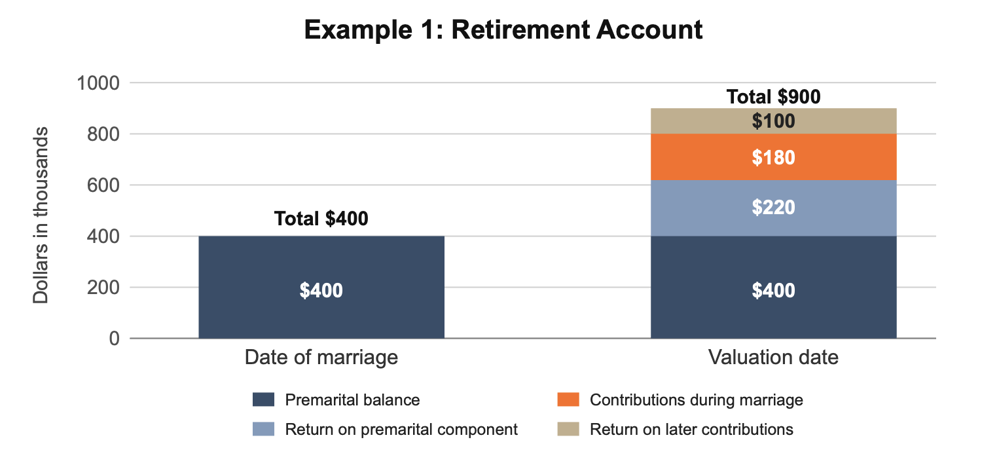
Figure 1. Hypothetical financial components; the chart does not characterize any component as marital or separate property
Determining the Applicable Return
When complete statements are available, the financial expert can calculate the account's returns for a certain time period. This statement-based approach reflects the investment mix and performance of the actual account.
If statements are incomplete, the financial expert may consider a market-based return as an assumption.
Under either approach, plan statements, contribution histories, pay records, tax forms, and rollover documents support the tracing analysis. In the illustration, $620,000 of the ending balance consists of the premarital principal and its allocated return, while $280,000 consists of contributions made during the marriage and their allocated return. This is a supported financial tracing result and conclusion, not a legal characterization. Missing records or unresolved transfers may limit the analysis and require the financial expert to disclose assumptions or present a range of results.
Example 2: Business Interest
The following fact pattern is for illustrative purposes and meant to be simplified. Assume one spouse founded and owned a professional services firm as of the date the marriage. Assuming the valuation expert’s scope includes a valuation as of the two relevant dates, date of marriage and date of divorce, the business had an equity value of $1.5 million at the date of marriage and $5.0 million at the divorce valuation date. Between the two relevant dates during the marriage, the business grew through expanded client relationships and service offerings, additional management and employees, and improved sales and earnings. The industry and economy also grew, and valuation multiples for comparable businesses increased.
For purposes of the illustration, the $3.5 million increase in value is analyzed and determined to consist of $2.1 million attributable to the owner-spouse’s active efforts and $1.4 million attributable to passive factors, including efforts of third parties, industry growth, and market conditions.
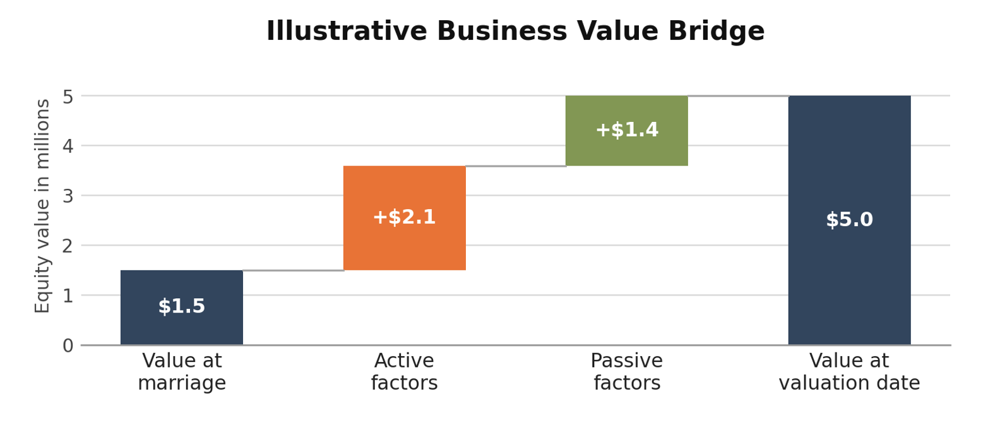
Figure 2. Hypothetical allocation of the increase in business value; amounts shown in millions
This analysis requires much more than subtracting the opening value from the ending value. The two valuations should use consistent assumptions, methods, and standards of value. Changes in capital contributions, acquisitions, distributions, and changes in debt should also be considered. For further background, refer to a previous article we authored: Active vs. Passive Appreciation of Closely Held Companies.
Personal and Enterprise Goodwill vs. Active and Passive Appreciation
Active and passive analyses assist in the process of determining how and why value changed between two dates. Personal and enterprise goodwill analyses address how much of the ending value depends on the owner-spouse and how much can remain with the business without that individual. The analyses consider some similar attributes, but the categories do not map directly.
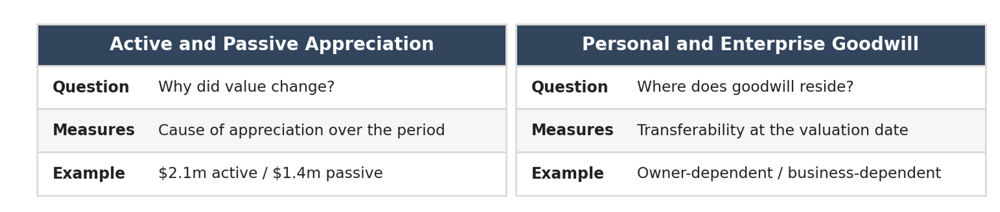
Figure 3. Active and passive appreciation and personal and enterprise goodwill address different valuation questions
It is important to understand these analyses and characterizations, however, jurisdictions and case law differ in applicability of one or the other. In some jurisdictions, both active vs. passive appreciation and enterprise vs. personal goodwill may be appropriate considerations; at that point, the facts and circumstances are considered by the experts and legal team.
In our example, if client relationships are tied to the owner-spouse's reputation or continued involvement, personal goodwill may be present. Recurring contracts, documented processes, a recognized trade name, and a workforce that can serve clients without the owner-spouse may indicate enterprise goodwill. We discussed these considerations in Personal vs. Enterprise Goodwill Issues to Consider in Divorce Valuations.
Observations Across the Examples
Both examples begin with an asset owned before the marriage, but that fact does not complete the financial analysis. A well-supported analysis establishes the relevant dates and values, traces contributions and transfers, distinguishes activity-driven changes from investment or market performance, reconciles related debt and capital transactions, and discloses the methodology, assumptions, and limitations.
The analyses may overlap. Retirement account tracing must distinguish deposits from investment returns and follow funds through a rollover. The business analysis considers owner-spouse efforts, market conditions, goodwill, distributions, and debt. Addressing one issue without considering the others may produce an incomplete or internally inconsistent result.
Conclusion
Marital vs. separate property analyses often require more than identifying when an asset was acquired or whose name appears on the account or ownership documents. Financial records can establish the origin and movement of funds, quantify the components of a current balance or value, and explain the factors that contributed to appreciation. The financial expert organizes and analyzes that evidence to assist counsel and the court, while counsel applies the governing legal framework to the ultimate characterization of property.