EXECUTIVE SUMMARY
A Wandry formula can help a donor transfer a specified dollar value of closely held stock while leaving the final ownership percentage to be determined through valuation. But when that percentage crosses a control or governance threshold, the rights and marketability of the resulting interest may change, and so may its value.
In some cases, the valuation assumptions used to calculate the provisional percentage may no longer apply to the interest they produce. This article examines that potential disconnect, illustrates how a control threshold can create a gap in the available ownership-value range, and highlights the questions counsel and the appraiser should address before the transfer is executed.
Start With the Client’s Control Boundary
A controlling stockholder may want to transfer a specified fair market value of closely held stock without surrendering control. A Wandry formula defines the gift by value, while the appraisal translates that value into a provisional percentage. If that percentage carries different rights or marketability characteristics, it must be revalued before being treated as final.
Planning begins by separating two potentially conflicting objectives: transferring stock having a stated value and retaining specified control or governance rights. Counsel should identify the rights that matter, including electing directors, approving shareholder action, influencing distributions, or blocking extraordinary action. The formula’s arithmetic does not eliminate the resulting block’s legal and economic characteristics.
Percentage calculations often assume value changes smoothly with the number of shares. That assumption holds only while the block’s characteristics remain sufficiently constant. Crossing a control or governance threshold may alter cash flows, risk, marketability, or the likely buyer universe. The appraiser must test the provisional percentage using the resulting block’s characteristics.
Revisiting Wandry
In Wandry v. Commissioner (T.C. Memo 2012-88), Albert and Joanne Wandry assigned to each recipient the number of family LLC units having a specified fair market value. The instruments provided for the number of units to be adjusted if value was later determined differently for federal gift tax purposes. The Tax Court construed the assignments as transfers of specified dollar values from the outset, rather than fixed percentage interests in the LLC later adjusted through a return of units to the donors.
The IRS formally nonacquiesced, reasoning that the records showed fixed percentage interests had initially been transferred and that a later reduction would return property to the donors. This article takes no position on that dispute. It addresses the narrower problem that arises when the assumed valuation schedule produces no percentage having the defined dollar value.
Treasury Regulation Section 25.2512-2 recognizes that block size and degree of control can affect value, while Revenue Ruling 59-60 identifies block size as a relevant factor in valuing closely held stock.1 Neither supplies a mechanical answer, but both underscore the threshold question: what property interest, with what rights, is being valued?
Ownership Percentage and Levels of Value
An appraisal generally begins with company-level equity value and then considers the rights and marketability of the specific block. Subject interest value need not equal a pro rata share of company value. Controlling and noncontrolling interests may occupy different levels of value because their cash flows, risk, marketability, and potential buyers may differ. Actual rights and economics, not the percentage label, determine the applicable level.
Noncontrolling blocks also need not have the same per-share value. Depending on law, governing documents, ownership dispersion, and likely buyers, a 40% interest may have more influence and a different marketability profile than a 10% interest. Subject interest adjustments may therefore change as ownership increases, even before a formal control threshold is crossed; percentage alone does not dictate a discount.
A Single C Corporation Illustration
Assume a donor owns all shares of a hypothetical C corporation and proposes a gift to one donee. One class of voting common stock is outstanding; there are no cumulative voting rights, voting agreements, proxies, or relevant supermajority provisions; and a holder of more than 50% controls ordinary shareholder action. The donor intends to transfer $8 million while retaining control.
The corporation has a $20 million equity value before subject interest marketability adjustments. To isolate the threshold issue, assume no holder-dependent change in expected cash flows or operating policies, and thus no separate control premium or lack of control discount. Assume a 25% discount for lack of marketability (DLOM) for a noncontrolling block and none for a controlling block. These assumptions are illustrative, not appraisal conclusions.
The initial calculation uses the characteristics of the intended noncontrolling, nonmarketable interest. Before the subject interest adjustment, each 1% interest represents $200,000 of equity value. Applying the illustrative 25% DLOM reduces that amount to $150,000. Dividing the $8 million gift by $150,000 produces a provisional 53.333% interest. That interest is controlling even though it was derived using noncontrolling characteristics.
The second calculation tests the provisional 53.333% against the rights of a block of that size. It would give the donee control, contrary to the donor’s intent. With no DLOM for a controlling interest, its indicated value is approximately $10.667 million. The provisional percentage therefore depends on assumptions that do not apply to the block it produces.
Table 1 :: Performing the Initial Calculation
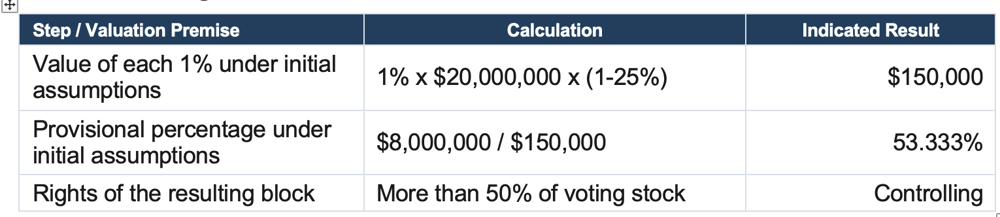
Table 2 :: Testing the Provisional Percentage

The Value Discontinuity
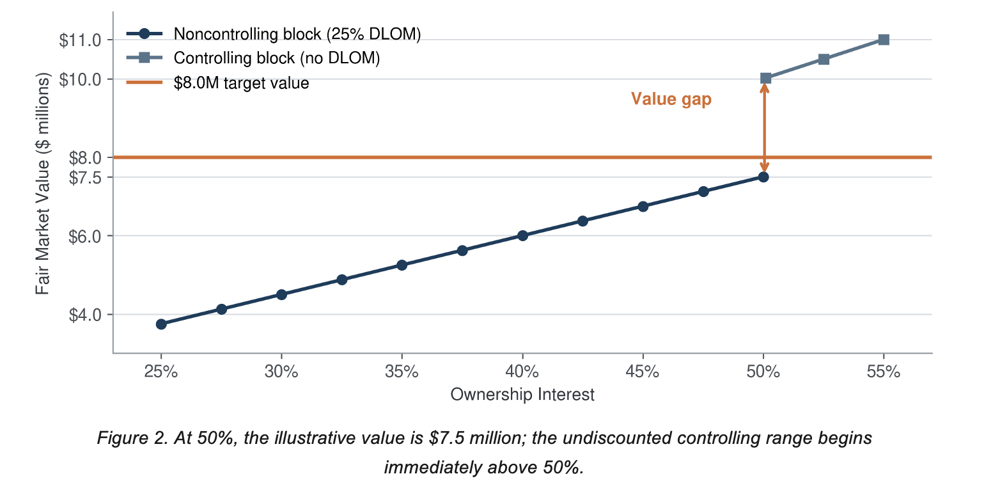
Under the stipulated assumptions, the mismatch is a discontinuity, not a rounding problem. A block at or below 50% is valued by applying the 25% DLOM to its pro rata share of $20 million. At 50%, value is $7.5 million. Immediately above 50%, the block becomes controlling and its value exceeds $10 million. The assumed value function skips a range.
Exactly 50% requires a separate legal and valuation inquiry. Depending on law and governing documents, a 50% block may carry blocking, veto, or deadlock rights without unilateral control. The $7.5 million figure is therefore an arithmetic convention for this illustration, not a conclusion applicable to every 50% interest.
On these assumptions, no percentage has a fair market value of exactly $8 million: the noncontrolling range ends at $7.5 million, while the controlling range begins above $10 million. A 49.9% transfer is worth approximately $7.485 million; the provisional 53.333% block is worth approximately $10.667 million.
As shown in Figure 1, the $8 million target line does not intersect either ownership-value range. Figure 2 presents the same discontinuity with ownership on the horizontal axis: the noncontrolling series reaches $7.5 million at 50%, while the controlling series begins above $10 million immediately after the threshold. Reversing the axes does not eliminate the gap.
The illustration produces no solution under the stipulated schedule and does not establish the legal consequence, which Wandry did not decide. The instrument purports to transfer $8 million although no percentage corresponds to that value. If the provisional 53.333% is entered on the stock ledger or exercised by the donee, those facts could support an argument that the fixed percentage was transferred. The appraiser should identify the conflict before implementation; counsel must determine the assignment’s legal effect.
Figure 1 :: No Ownership Percentage Corresponds to an $8 Million Gift
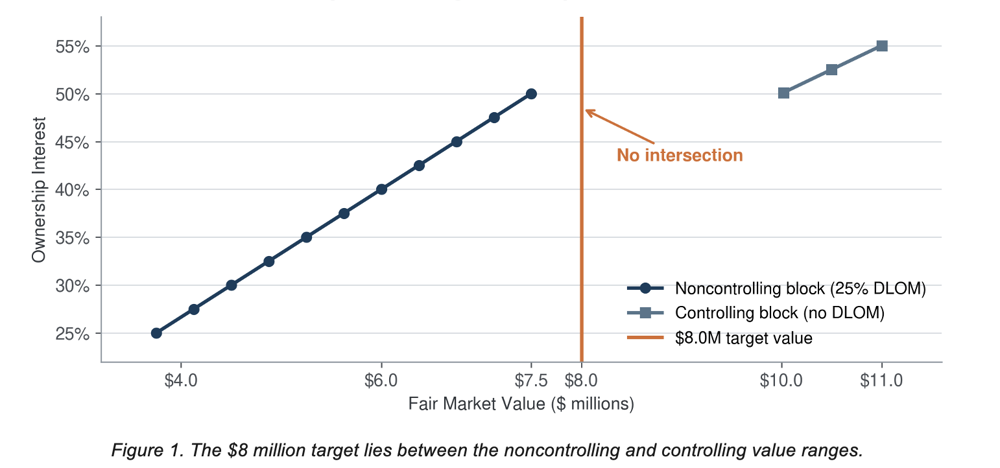
Figure 2 :: Value Discontinuity at the Control Threshold
Questions Counsel and the Appraiser Should Resolve Before Execution
Which dollar and ownership rights priorities should govern the transfer? Counsel should determine whether the priority is the specified value, retained governance powers, a percentage ceiling, or some combination. If every objective cannot be satisfied, the instrument should not leave their priority implicit.
What percentage range should be considered? Before execution, the appraiser can estimate the percentage range that might satisfy the defined amount. Comparing that range with the capitalization table and voting thresholds tests feasibility, not final value. The exercise may require several iterations as the percentage and subject interest adjustments are refined.
How do rights and marketability change across that range? Counsel should determine the rights associated with each plausible block. The appraiser should consider how those rights affect cash flows, risk, holding period, distributions, liquidity, and potential buyers. Company level value and subject interest adjustments should remain separate.
How will ownership rights be administered before the percentage is final? Counsel should determine how voting, dividends, consents, tax reporting, and other rights will be handled while valuation is pending. A provisional percentage that crosses a control threshold is not merely a clerical entry.
How will the plan address a gap between value ranges? If no percentage achieves both objectives, the appraiser should describe the discontinuity rather than force an answer. Counsel can evaluate a percentage ceiling, another asset, recapitalization, or a staged transfer. The instrument, appraisal, return, and ownership records should describe the same transaction.
What property will the final appraisal value? Once the transferred quantity is identified, the appraisal should define the subject interest as stated shares, units, or a percentage and conclude on that property’s fair market value. It should not assume the target dollar amount and merely solve backward for the quantity transferred.
Counsel and the appraiser should address these questions together while preserving their roles. Counsel determines what the instrument transfers and resolves conflicts between value and control. The appraiser evaluates plausible blocks and identifies assumptions that fail to produce a coherent result. Both should understand the transaction records.
Conclusion
A Wandry formula can fix transferred value while leaving percentage to valuation, but that percentage carries legal and economic rights. When those rights conflict with valuation assumptions, the appraiser should identify the discontinuity and counsel should address it in the instrument and records. The parties may need several iterations so the instrument, appraisal, and records identify the same property.
Mercer Capital assists clients and their legal and tax advisors with the valuation of closely held business interests for gift and estate tax planning and compliance. Our valuation professionals work with counsel throughout the planning process to evaluate the valuation implications of a proposed transaction, identify issues that may affect fair market value, and prepare independent, well-supported appraisals that are consistent with the transaction documents and ownership records.
1 Rev. Rul. 59-60, 1959-1 C.B. 237, Sections 4.01(g) and 4.02(g).