Gone are the days of paper logbooks, because the future is here for truckers in the form of Electronic Logging Devices, or ELDs. But what are they, what do they do, and what will they be replacing?
Most operators of Commercial Motor Vehicles (CMVs) must keep a Record of Duty Service (RODS) to ensure that they are complying with federally mandated Hours of Service (HOS) guidelines. All this alphabet soup to say, the federal government regulates how many hours drivers can be on duty in a daily or weekly cycle. Drivers are required to keep records about their duty hours which can be audited by the Department of Transportation or checked by police officers at roadside inspections. In the past, drivers have kept pencil and paper logs, but these are prone to error and intentional tampering.
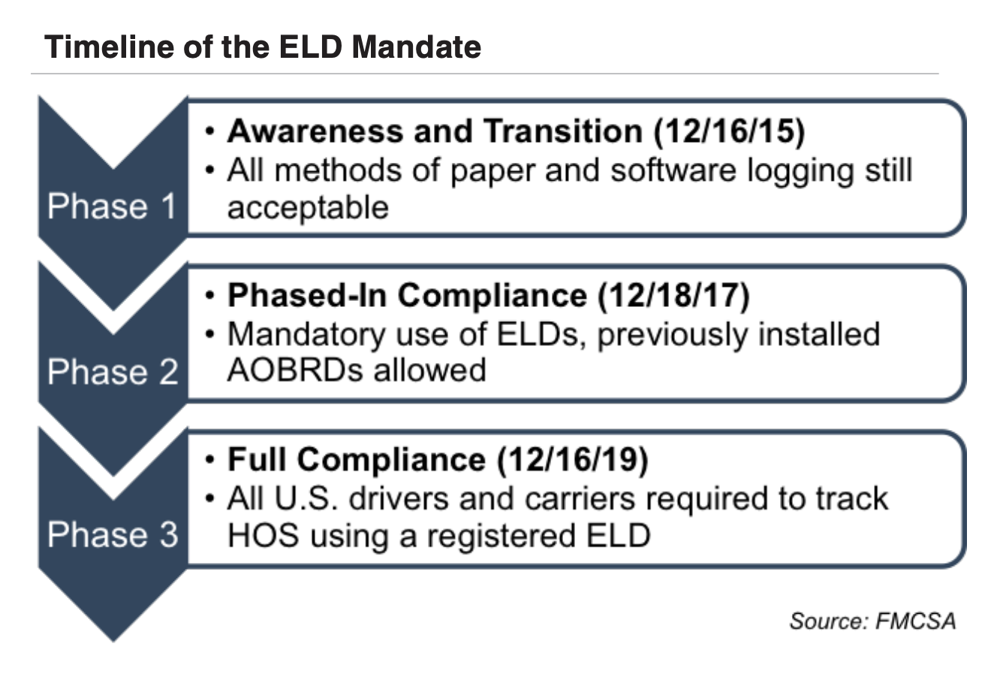
That is where the ELD comes in. Compliant ELD devices connect with the engine by directly interfacing with the CMV electronic control module. It captures engine power status, vehicle motion status, miles driven, and engine hours. These data points will combine with the other information that an ELD records, such as an automated entry when the driver’s duty status changes, every 60 minutes while the vehicle is in motion, and when the engine turns on or off. ELDs are significantly harder to tamper with, so drivers will automatically provide RODS information in an accurate way through their devices. ELDs will also ensure that any edits to RODS data are confirmed by the driver, where in the past that was not required. These changes are all significant, and will likely impact how many miles a driver can log while remaining compliant with HOS guidelines, but it is important to note that said guidelines remain unchanged, they will be the same as they were prior to the ELD mandate.
It wasn’t all paper and pencils before the ELD mandate, however. Some larger companies have already started implementing Automatic Onboard Recording Devices (AOBRDs) to track their drivers. Although AOBRDs record certain information about the truck, the level of detail captured is not sufficient to meet the requirements of the new mandate. However, carriers who implemented AOBRDs before the compliance date may be allowed to use them until ELDs become mandatory for all RODS-providing companies at the end of 2019.
Waiting until the last minute to transition may not be beneficial, as companies will likely face a learning curve when it comes to integrating the devices and redeveloping processes. As FreightWaves’ Brian Straight explains, “How long that learning curve is will depend on the individual and waiting to the last minute could be detrimental to the productivity of your operation.”
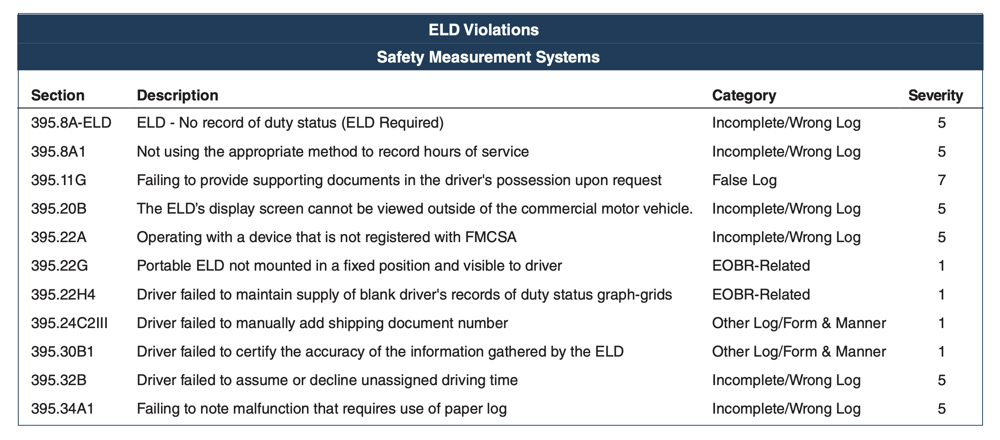
Smaller carriers worry that the ELD mandate will disproportionally affect their operations. Many large carriers have already adopted ELDs as a way to monitor their drivers and optimize their business. Additionally, large carriers may find themselves better able to absorb the cost of the mandate. Although the implementation of ELDs offers savings in the long term through the reduction in paperwork costs, they can be financially onerous at the outset. Finally, since larger carriers have already begun implementation, they may be ahead of the competition when it comes to training their drivers at the outset of the mandate, and have already had the opportunity to work through technical hiccups that small carriers may run into when implementing these new systems.
Although the industry expects ELDs to be beneficial as a whole, the implementation will require a significant shift in the way many trucking companies operate. ELD technology will enable carriers to gather valuable data on their fleet, save money on back office expenses, and provide safety upsides. However, the burden may fall more heavily on smaller carriers, many of whom worry about the initial financial and resource investments required. Whatever your thoughts are, the ELD mandate is here, and it looks like it’s here to stay.
Originally published in Mercer Capital's Transportation & Logistics Newsletter: First Quarter 2018