Will they? Or won’t they? The imposition of tariffs and the broadness of their application has been a hot topic. Uncertainty over when they would come into effect, which countries would be subject to them, and which products or goods would be exempt, has contributed to market swings. As the health of the transportation and logistics industry is closely tied to the overall health of the economy, the impact of tariffs could be large.
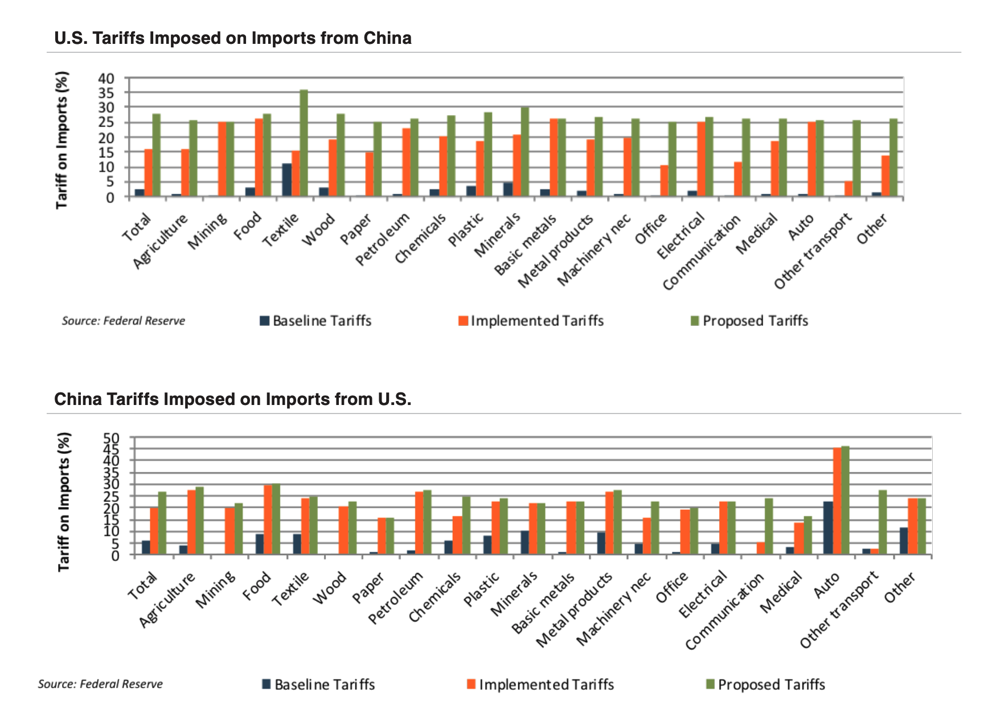
Paul Bingham, Director of Transportation Consulting at IHS Markit noted that the threat of impending tariffs could have been partially responsible for the flurry of shipping seen in 2018, especially when compared to slow first quarter of 2019. As companies accelerated freight shipments to avoid tariffs, rates grew and capacity filled. After the implementation of tariffs, rates fell in trucking, rail, and intermodal. Grain and soybean carloads declined. The USMCA (the successor to NAFTA) could encourage more investment and production in Mexico, as opposed to China, which may be a boon to trucking and rail shippers.
Tariffs would also directly impact marine transportation. A reduction in goods shipped means fewer container ships entering ports. This, in turn, impacts the trucking industry, which distributes imported goods from port cities across the country. DAT Solutions estimate that 7% of container volume from China could be impacted by tariffs. The timing of tariffs also impacts the transportation industry, as shippers may rush to get products shipped before the imposition of additional tariffs or delay shipping if they think the tariffs may be reduced.
Between decreased freight demand, which has contributed to lower spot rates, many trucking firms have failed during 2019. Donald Broughton of Broughton Capital estimates that over 600 freight companies went out of business before September. Although spot rates have fallen, most companies have not reduced driver pay, resulting in cash flow issues.
On the plus side for the transportation industry, 53-foot containers (but not the cargo within) officially excluded from tariff lists. As there are no longer any American-based manufacturers of 53-foot containers, the American Trucking Association estimates that the logistics industry would have had nearly $750 million in additional expenses over the next decade had a tariff been applied. Additionally, President Trump has indicated that some key consumer products, including computers and toys, may not be subject to tariffs until mid-December, potentially preventing downward pressure on holiday sales.
Originally published in Mercer Capital's Transportation & Logistics Newsletter: Third Quarter 2019